Early Summer in Sapporo: The Passionate YOSAKOI Soran Festival Begins!
An in-depth look at the 35th YOSAKOI Soran Festival in 2026. Discover its history from a student's passion, herring fishing roots, and community impact.
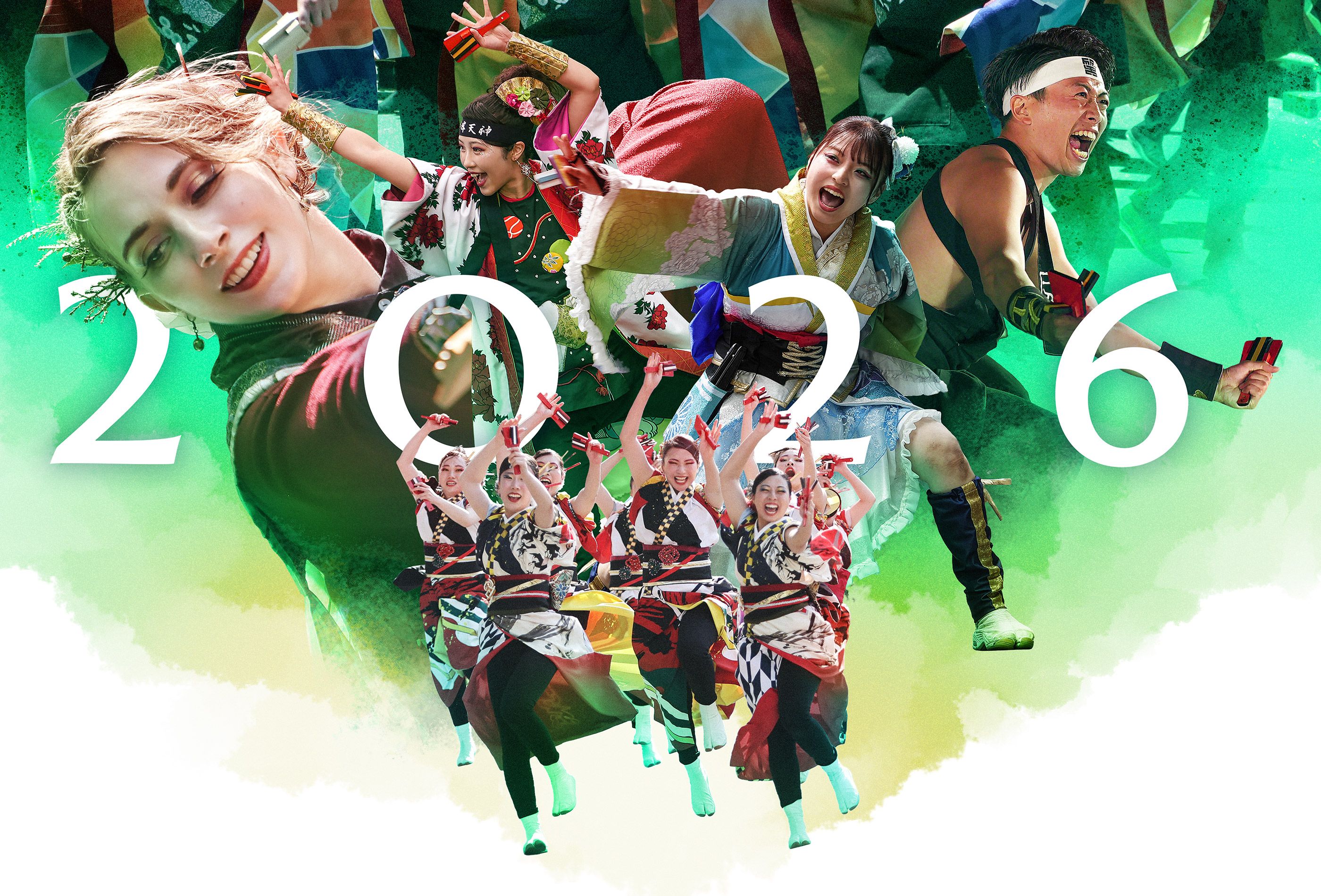
Early summer in Sapporo. From June 10 to 14, as the scent of lilacs fills Odori Park and soft greenery paints the city, Sapporo transforms into a whirlpool of passion. The rhythmic clacking of "naruko" clappers, deep bass rattling the ribcage, and the powerful chants of "Soran, Soran!" echo through the streets. What began in 1992 through the passion of a single university student, the YOSAKOI Soran Festival finally celebrates its milestone 35th anniversary in 2026. Once dismissed as "student play" and criticized as a "source of noise pollution," it has grown into a major cultural and economic infrastructure representing Hokkaido, attracting about 30,000 dancers and 2 million spectators from Japan and abroad. Why does this festival captivate so many while sparking intense debate, and how is it bridging to the future? We examine its 35 turbulent years from historical, cultural, economic, and social perspectives.
【The Origin】A Single Student Transports "Kochi's Heat" with Dedicated Friends
It all began in the summer of 1991. Gaku Hasegawa (now a member of the House of Councillors), then a student at Hokkaido University, encountered the traditional "Yosakoi Festival" in Kochi Prefecture while visiting to care for a sick relative. He witnessed citizens in vibrant costumes dancing through the streets with naruko clappers, generating an energy that shook the entire town. Greatly moved, Hasegawa thought, "I want to bring this heat back to early summer in Hokkaido, where nothing usually happens. I want to build a new culture that unites people." Upon returning to Sapporo, Hasegawa formed an executive committee with five friends. However, these students, lacking resources or track records, faced steep adult social hurdles. They directly negotiated with the Mayor of Sapporo, persuaded local shopping district leaders, and sought cooperation from university administrators. Initially, they were often met with cold shoulders, dismissed with remarks like, "Isn't this just an extension of a school festival?" or "How can you call it a festival without any tradition?" Yet, their passion gradually moved those around them. They secured naruko from Kochi, incorporated Hokkaido's traditional "Soran Bushi" folksong, and recruited teams. Through persistent negotiations, the inaugural YOSAKOI Soran Festival took place in June 1992, featuring just 10 teams and 1,000 dancers. The moment the fusion of naruko and Soran Bushi was performed in Odori Park at the heart of Sapporo, a new chapter of the city's history was written.
【Culture】The Soul of "Soran Bushi" Awakening Memories of Herring Fishing
The soul of the festival is anchored by Hokkaido's traditional folksong, "Soran Bushi." The roots of this famous melody trace back to the herring fishing boom along Hokkaido's Sea of Japan coast (including the Shakotan Peninsula and Otaru) from the Meiji era to the early Showa period. Although herring fishing was a "gold rush" that could yield fortunes in a single night, it was a life-threatening, grueling labor. In particular, "okiage" (scooping huge masses of herring from nets into ships using dip nets) required hours of non-stop, intense physical effort. To coordinate their movements and keep their spirits up in the face of exhaustion, fishermen sang to the chant of "Soran, Soran!" This work song, known as "Okiage Ondo," is the origin of Soran Bushi. Lyrics such as "Ask the seagull if the herring have come" and "The sea of Tsugaru where wave flowers scatter" embody earnest prayers for a catch and the resilient spirit of Hokkaido's pioneers surviving the harsh winter seas. The YOSAKOI Soran Festival took this work song born of sweat and tears and re-imagined it as a dynamic dance backed by modern beats like rock, jazz, and hip-hop. By doing so, it plays a vital cultural role: keeping the memory of Hokkaido's pioneers alive through the bodies of modern youth and passing the baton to the next generation.
【Innovation】Diversity Spawned by Freedom Beyond "Naruko" and "Soran Bushi"
The primary reason the festival spread nationwide and abroad within years is the freedom of its rule design. The mandatory rules for participating teams are incredibly simple. First, "dancers must hold naruko in their hands." Second, "the music must include a phrase from Soran Bushi." Aside from these two rules, everything else—costume design, music genre, dance style, team size, and composition—is left entirely to the team's discretion. This loose constraint stimulated the creativity of choreographers, dancers, and students. Various artistic styles emerged: classical themes featuring shamisen and taiko drums, heavy metal arrangements of Soran Bushi, and fusions of samba, flamenco, and street dance. Moreover, team identities vary widely: students showcasing youthful energy, corporate teams promoting company unity, and community teams expressing local traditions and landscapes. This diversity transformed Sapporo's streets into a massive open-air theater, establishing an aesthetic of diversity that never bores spectators.
【The Economy】A 20 Billion Yen Engine Bridging the Tourism Gap
From an economic standpoint, the YOSAKOI Soran Festival has become a major driver of Sapporo's tourism strategy. Early June was historically a blank spot for Sapporo tourism. The Sapporo Snow Festival in February had passed, and although the weather improved, it fell right before the July Summer Festival and the main summer vacation season, representing a low-occupancy transition period. Hotels and restaurants struggled for years to attract customers. The festival changed this entirely. Today, the 5-day event draws about 2 million spectators, including hundreds of thousands from outside Hokkaido and overseas. During this period, hotel occupancy rates in Sapporo reach nearly 100%, making reservations difficult months in advance. Furthermore, the costs of costume design, music composition, float rentals, and expenditures on dining and lodging by participants and spectators generate an estimated annual economic impact of 20 to 25 billion yen. What was once seen as a student club project now supports thousands of jobs and local businesses, shaping a major "economics of the festival."
【The Struggles】Noise Pollution Controversies, Public Manners, and Commercialization
Amid rapid growth, the festival faced friction with local communities. The most intense complaints concerned noise. Dancers are led by floats (jikatasya) equipped with massive speakers blasting bass through the streets. In the business district and venues near residential areas, this noise caused significant stress for residents and workers. Detractors labeled the event "YOSAKOI Soran" (noise/riot), leading to lawsuits and petition campaigns against the festival. Public manners also drew criticism. Dancers using subways and convenience stores in flashy costumes and heavy makeup, occupying public roads for practice, and leaving behind litter alienated some citizens who felt the behavior was inconsiderate. Furthermore, commercialization concerns arose over participation fees, paid seating, and corporate logos on costumes. Some worried that the traditional spirit was being overshadowed by commercial event management, prompting questions about whether the festival was shrinking to serve only a small group of enthusiasts.
【Coexistence】Evolving into a "People-Friendly Festival" and a Sustainable Future
In response to these challenges, the executive committee spent decades making improvements. For noise control, maximum volume limits were set in decibels and strictly monitored. Venues shortened evening hours, and float speaker directions and acoustic balances were adjusted. Regarding manners, organizers recommended wearing overcoats to cover costumes when moving between venues, boosted volunteer cleanup efforts, and encouraged teams to engage in community service. To reduce overcrowding at Odori Park, satellite venues were set up in parks, shopping streets, and parking lots across Sapporo. This decentralized model avoided city center congestion while spreading the festive mood across the entire city. Approaching its 35th anniversary in 2026, the festival is advancing these coexistence efforts further by expanding barrier-free seating for seniors and disabled guests, providing real-time crowd updates via smartphone GPS, and practicing eco-friendly waste separation. The event is shifting from a simple dance festival to a sustainable civic culture in harmony with the urban environment.
【Comparison】The Unique "Sapporo Model" vs. Tokushima and Kochi
Comparing Japan's three major dance festivals—Tokushima's Awa Odori, Kochi's Yosakoi, and Sapporo's YOSAKOI Soran—reveals Sapporo's distinct characteristics. Awa Odori boasts over 400 years of history, focusing on traditional performing arts where dancers move gracefully to live shamisen, flute, and drum music (narimono) in set steps. Kochi's Yosakoi began to revitalize a post-war depressed economy, primarily utilizing parade formats led by trucks. In contrast, the Sapporo model is characterized by stage performances and competitive contests. Within a maximum time of 8 minutes, teams present highly coordinated choreography, rapid costume changes, and elaborate stage props that tell a complete story. Dancers compete for the coveted "YOSAKOI Soran Grand Prize" judged by a panel, a title as valued as an Olympic gold medal to participants. This athletic and competitive nature is what draws youth and maintains professional-grade performances year after year.
【Outlook】The 35th Anniversary and Passing the Baton of Passion
The 35th festival will take place from Wednesday, June 10 to Sunday, June 14, 2026. This milestone year will feature "Kamome no Tatsutori-san," the festival's first new official mascot in 17 years. Teams from Hokkaido, across Japan, and overseas—including Brazil, Taiwan, South Korea, and Russia—are scheduled to perform. The passion to connect people dreamed of by Hasegawa has transcended borders, elevating Sapporo into a hub for cultural diplomacy. Thirty-five years ago, a small seed of passion planted in Hokkaido's soil by a single student grew into a massive tree, nurtured by countless tears, sweat, and community support. It is no longer just a temporary event, but a celebration of life where Hokkaido residents, knowing the severity of winter, express their joy for spring and celebrate community. Respecting tradition while constantly embracing innovation, the YOSAKOI Soran Festival will continue to echo the sound of naruko through Sapporo's early summer skies.
【Sources】