NVIDIA RTX Spark: The Redefinition of the PC Begins
NVIDIA's Arm-based 'RTX Spark' sends shockwaves through the PC market. A four-way battle with Intel, AMD, and Qualcomm, and Jensen Huang's vision of 'Agentic PCs'.
The Shock of 'RTX Spark' Overturning 40 Years of PCs
At NVIDIA GTC Taipei on June 1, 2026, NVIDIA announced "RTX Spark" (codename: N1X), signaling its full-scale entry into the consumer PC processor market. This is not just the arrival of a new chip. Against the tradition of the x86 architecture that has dominated the PC industry for over 40 years, NVIDIA, the champion of graphics and AI, has thrown down the gauntlet head-on with an Arm-based "superchip." While the chip itself isn't entirely novel, CEO Jensen Huang emphasized a shift in the nature of PCs in his keynote: "The basic structure of the PC hasn't changed in 40 years. RTX Spark is designed to transform the PC from a mere tool into an 'agentic' device that autonomously handles complex AI tasks locally."
A Unified Architecture Surpassing 'Apple Silicon'
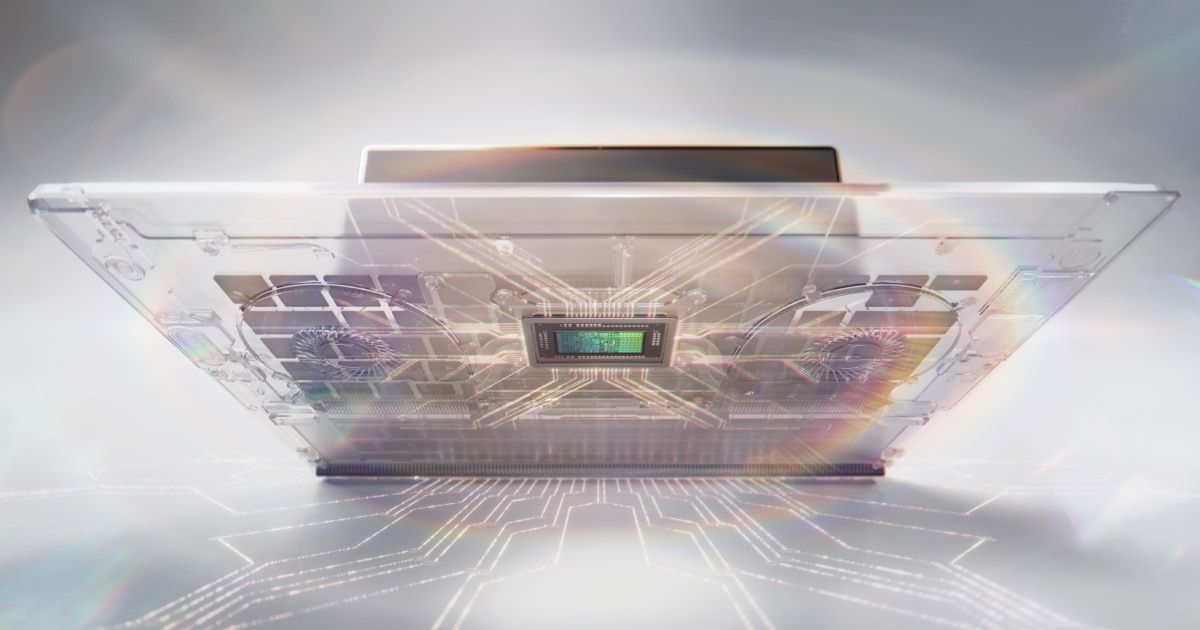
RTX Spark adopts TSMC's cutting-edge 3nm process and a unified memory architecture that integrates CPU, GPU, and a powerful AI engine into a single package. This eliminates to the utmost limit the bandwidth restrictions that have been bottlenecks in conventional notebook PC designs.
What is noteworthy are its astonishing specs. Jointly developed with MediaTek, it features a 20-core NVIDIA Grace CPU, and the GPU boasts 6,144 CUDA cores based on the latest Blackwell architecture. This means achieving a computation scale comparable to the high-end desktop GPU, RTX 5070, within the thin chassis of a notebook PC.
Item | Specification Details |
CPU | 20-core NVIDIA Grace (Arm-based) |
GPU | Blackwell Architecture (6,144 CUDA cores) |
AI Performance | Up to 1 Petaflop (FP4) |
Memory | Up to 128GB LPDDR5X Unified Memory |
Process | TSMC 3nm |
Massive Impact on Competitors and the 'Four-Way' Battle
With NVIDIA's entry, the PC market has transformed into a fierce four-way battlefield among Intel, AMD, Qualcomm, and NVIDIA. Immediately after the announcement, stock prices for Intel, AMD, and Qualcomm fell by 1% to 8%, showing how seriously the market takes the threat of "RTX Spark."
It will be the biggest hurdle especially for Qualcomm, which was leading with "Windows on Arm." While Qualcomm pursues power efficiency with the Snapdragon X Elite, NVIDIA brings in the CUDA ecosystem cultivated over 30 years and the overwhelming assets of gaming and creative software represented by DLSS 4.5.
Furthermore, Intel and AMD, which were previously "partners for equipping GeForce" for NVIDIA, will become direct competitors in the premium notebook PC segment. NVIDIA has clearly stated its "100% focus on Windows" and is preparing to run existing x86 applications comfortably through Microsoft's Prism emulator and native porting.
The Future of AI-Driven PCs: OpenShell and Local AI
The true worth of RTX Spark lies in its AI processing capability. With up to 1 petaflop of FP4 computing power, it can run Large Language Models (LLMs) of up to 120 billion (120B) parameters locally without relying on the cloud. This sets up an environment where users can utilize ultra-fast, advanced AI agents while protecting privacy.
The "OpenShell" stack advocated by NVIDIA will become the foundation for local AI agents, presenting a future where it learns and automates user workflows. Jensen Huang said, "In the future, the PC will not simply be a machine waiting for instructions, but a partner that understands the user's intent and works in parallel."
With this high-performance AI capability and abundant memory, it's highly likely the meaning of the personal computer will change significantly. Sharp's Zaurus didn't sell, but the iPhone reinvented the mobile phone market, and already, most people use smartphones without using the telephone function. He suggests the same thing will happen to PCs in the future.
Market Launch Timing and Price Outlook
The first products equipped with RTX Spark are scheduled to begin shipping in the fall of 2026. Major manufacturers such as ASUS, Dell, HP, Lenovo, MSI, and Microsoft (Surface series) have already announced the development of models adopting it. The target is said to be the "premium high-end market," and it is expected to be introduced sequentially starting from high-end models priced over $2,000. Equipped with 128GB of memory, Apple, which is planning the Apple M5 Studio Ultra, will be significantly led in AI capabilities (RTX5070 = 988 TOPS, while Mac Studio m3 Ultra = only 36 TOPS and costs around 800,000 yen), so it's highly likely that the market for Mac Studio Max or Ultra purchased for AI will heavily flow to NVIDIA PCs.
Regarding adoption for gaming handhelds (such as successors to Steam Deck), which some are expecting, while stating it's not a priority at this time, Mr. Huang hinted, "We are ready to cooperate if requested," raising high expectations for a ripple effect to portable devices in the future.
NVIDIA is already proceeding with the development of the next-generation "N2X" and "N3X" architectures, aiming for long-term hegemony in the PC processor market. 2026 may be remembered as the year that was later called the "Renaissance of the PC."
【Sources】
- NVIDIA Official Newsroom
- PCMag: NVIDIA RTX Spark Analysis
- Business Insider: Market Reaction to NVIDIA's PC Chip