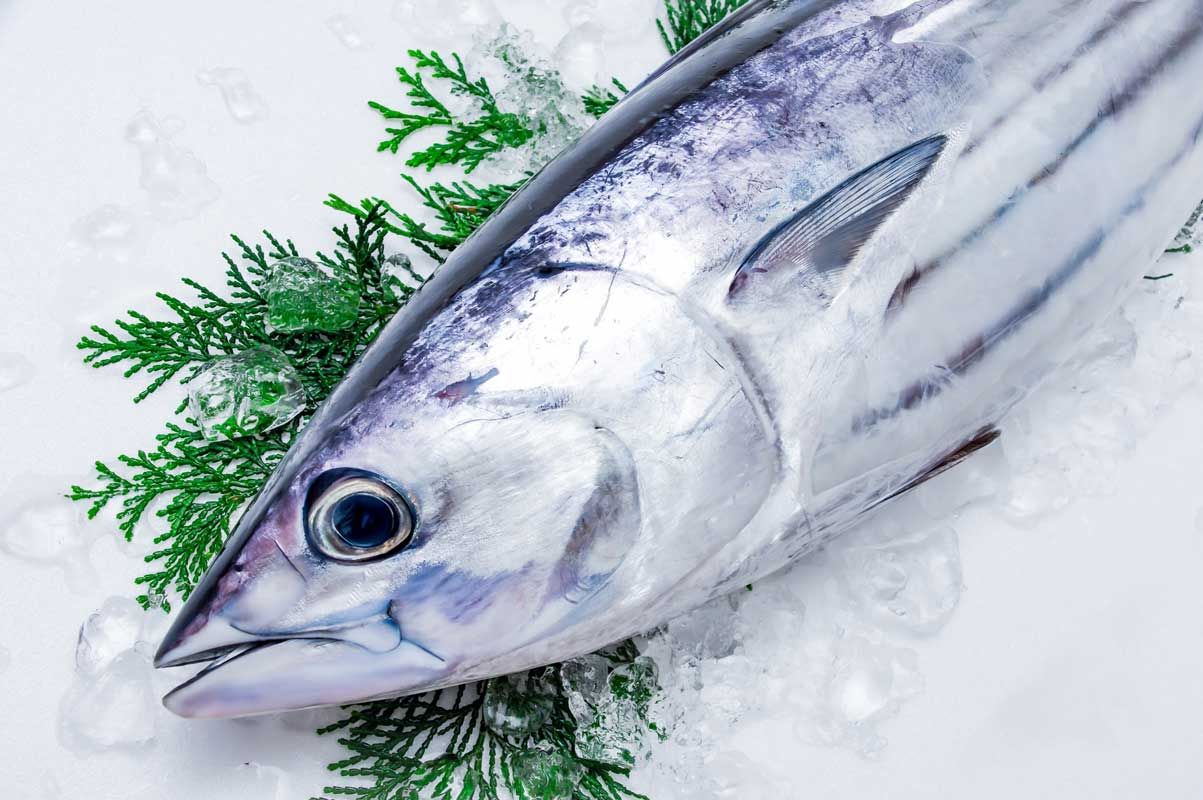
Hatsugatsuo and Modorigatsuo: Savoring Two Bonito Seasons
Enjoying bonito during its two distinct seasons: the lean, refreshing spring Hatsugatsuo and the rich, fatty autumn Modorigatsuo.
"Hatsugatsuo" (first bonito) appearing in spring fish markets and "Modorigatsuo" (returning bonito) drawing attention toward the end of autumn. Bonito is a fish that clearly changes its profile twice a year. The Ministry of Agriculture, Forestry and Fisheries (MAFF) introduces early summer specimens heading north in the Pacific riding the Kuroshio Current as Hatsugatsuo, and those migrating south in autumn as Modorigatsuo. The former is refreshing, while the latter is fatty and chewy. Just knowing this difference will significantly change how you choose it in the market.
First, Hatsugatsuo from around April through early summer features a spring-like lightness. With lower fat content, it yields aroma easily and pairs excellently with condiments. MAFF's public relations magazine recommends "tataki" (seared bonito) for Hatsugatsuo. Lightly searing the surface and eating it with layered Japanese ginger, shiso, ginger, and onion allows the refreshing taste of the red meat to stand out. Slicing it slightly thinner rather than thick brings out the best of this season.
On the other hand, Modorigatsuo around October has ate plenty in the northern seas before returning, making its fat layer entirely different. The meat has bounce and a rich mouthfeel. Cutting thick slices for sashimi is the primary choice here, but it also suits rare steaks seared only on the surface or tataki seasoned heavily with garlic. Spring is for "aroma," and autumn is for "fat." Even with the same bonito, the reason it becomes the star of the table differs.
Looking at production areas, the distinct characteristics of representative ports also become clear. Yaizu City explains on its official website that the bonito catch landed at Yaizu Port is the highest in Japan. They support high freshness through quick processing and rapid freezing on board, offering everything from sashimi and straw-seared tataki to bonito flakes and canned products. When you want to enjoy spring's Hatsugatsuo quickly, Yaizu's strength in "competing on freshness" is easy to appreciate.
Another major representative is Makurazaki in Kagoshima Prefecture. Makurazaki City introduces a port town food culture that enjoys bonito in various ways—including salted belly skin, senji, and namaribushi, in addition to sashimi and tataki—on its "bonito products" introduction page. If you want to learn how to distinguish and savor the light meat of spring with spices versus the rich meat of autumn cut thickly, Makurazaki's culinary guide serves as an excellent model.
If you're unsure at the store, choose based on the color and cut of the red meat. Hatsugatsuo is suitable for short-seared tataki or marinades meant to be paired with condiments, while Modorigatsuo is perfect for thick-cut sashimi or steaks where you can enjoy the fat layers. Tracking the two seasons as "different periods of the same fish" makes it even more interesting. Bonito is a fish that delivers the transition of seasons right to your palate.
Sources
Ministry of Agriculture, Forestry and Fisheries "November 2018 Text Information" https://www.maff.go.jp/j/pr/aff/1811/characterinformation.html
Yaizu City "Exquisite! 'Yaizu Seafood'" https://www.city.yaizu.lg.jp/business/suisan-nougyo/fisheries/sea/seafood/index.html
Makurazaki City "Bonito Products" https://www.city.makurazaki.lg.jp/soshiki/suisan/360.html