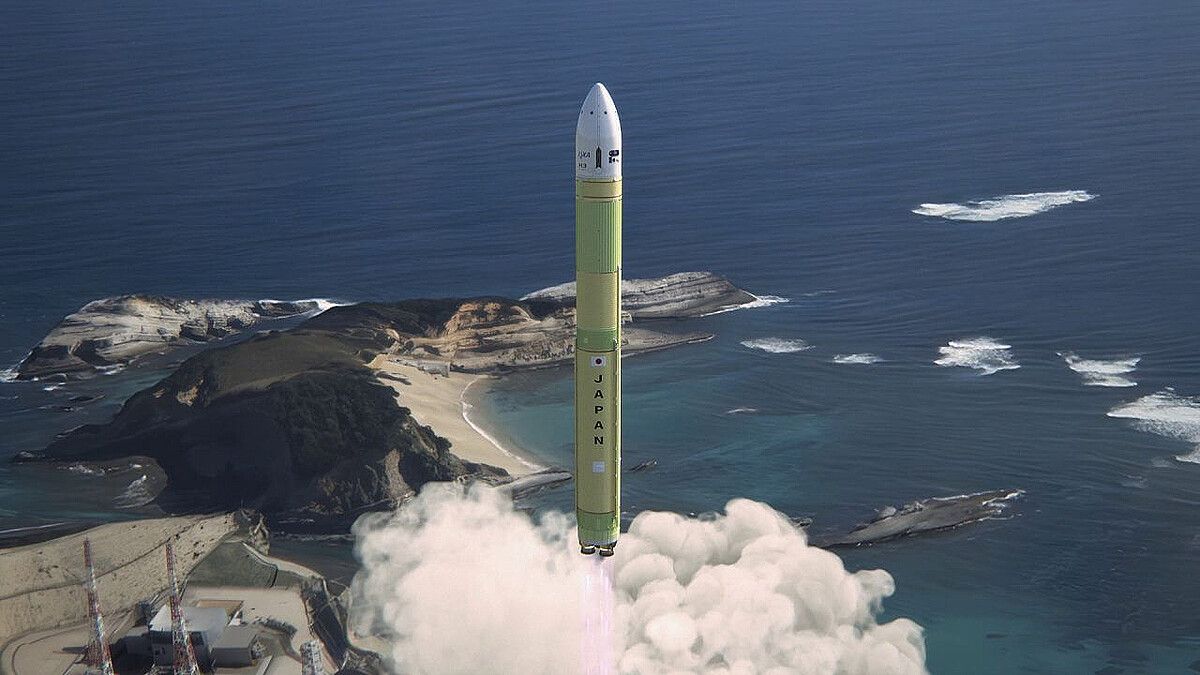
H3 Rocket No. 6 Set for June 10 Launch: A Crucial Fight for Japan's Space Business
On June 10, 2026, Japan's next-generation H3 Rocket No. 6 will launch from Tanegashima. This mission will test the booster-less H3-30 configuration and aim for a comeback.
Japan's Space Development Rechallenges the Future with "H3"
On June 10, 2026, the launch of Japan's next-generation flagship rocket, "H3" No. 6, is scheduled at the Tanegashima Space Center. This launch carries meaning beyond simply putting a satellite into orbit. It represents an extremely important milestone for the H3 project, which has repeated numerous successes and bitter failures since its development began in 2014, and for determining whether Japan can survive in the international space transportation business.
This particular rocket will fly for the first time in the cheapest and simplest configuration, "H3-30." The success of this configuration, which ascends solely on the power of the main engines without using solid rocket boosters, will be the final piece in completing the "low-cost, high-frequency" launch services targeted by H3.
The Journey of the H3 Rocket and This Mission
The H3 rocket was developed as the successor to the H-IIA, which supported Japan's space transportation for over 20 years. Although No. 2 and No. 3 successfully launched in succession in 2024, entering the operational phase, the launch of No. 8 in December 2025 unfortunately failed due to a malfunction in the satellite mount structure. No. 6 serves as a stage for revenge after implementing thorough countermeasures.
Item | Detailed Content |
Scheduled Launch Date | June 10, 2026, from 9:53 AM (JST) |
Rocket Configuration | H3-30 configuration (3 LE-9 engines, no boosters) |
Launch Site | Tanegashima Space Center, Large Rocket Launch site |
Main Payload | Vehicle Evaluation Payload VEP-5, 6 small secondary satellites (public call) |
Objectives | Flight demonstration of the new configuration, verification of countermeasures from last year's failure |
Innovative Technologies Realizing "Cheap and Easy to Use"
The greatest weapon of H3 is the thorough reduction of cost while maintaining reliability. The main engine, "LE-9," is the first in the world to adopt the "expander bleed cycle" for a large rocket, which reduces the number of parts to the extreme. Furthermore, about 90% of the electronic equipment utilizes consumer-grade components from automobiles, and by introducing part manufacturing via 3D printers, they succeeded in reducing the launch cost to about half of the previous standard (starting from approx. 5 billion yen).
Another major feature is modularity, allowing changes in the number of engines and boosters depending on the scale of the satellite. The 30 configuration used in this mission meets the demand to launch lightweight satellites in a short period at a low price, serving as a key to encouraging private sector entry.
Impact on Space Business and Japan's Autonomy
Currently, the global rocket market is dominated by SpaceX's "Falcon 9" with an overwhelming share. The mission of H3 is to maintain Japan's own "independent launch capability" and establish a position in international business amid this fierce competition.
Having an independent rocket is not limited to economic activity. The ability to launch satellites essential for national security and large-scale disaster monitoring at any time from within the country, without being influenced by the convenience of other nations, is an important foundation for protecting national autonomy. In this launch, a rideshare service for private satellites by Space BD and others is also being conducted, showcasing the transition of Japan's space industry from government-led to government-private business.
Future Outlook: From Artemis Program to the Next Generation
Once the full H3 lineup is demonstrated by the success of No. 6, missions requiring even higher reliability and frequency await. This includes launching the new cargo transporter (HTV-R), which will handle cargo supply to the lunar orbit station "Gateway" under the U.S.-led international lunar exploration "Artemis Program."
The expander bleed technology and low-cost expertise cultivated in H3 will also connect to the development of future "reusable rockets." On June 10, the fire of H3 rising into the sky of Tanegashima will represent the very will of Japan's space industry to stand shoulder-to-shoulder with the world again and continue challenging new heights.
【Sources】
- JAXA (Japan Aerospace Exploration Agency) Official Release
- sorae: Space Development News Site
- Space-Connect: Next-Generation Rocket Technology Commentary