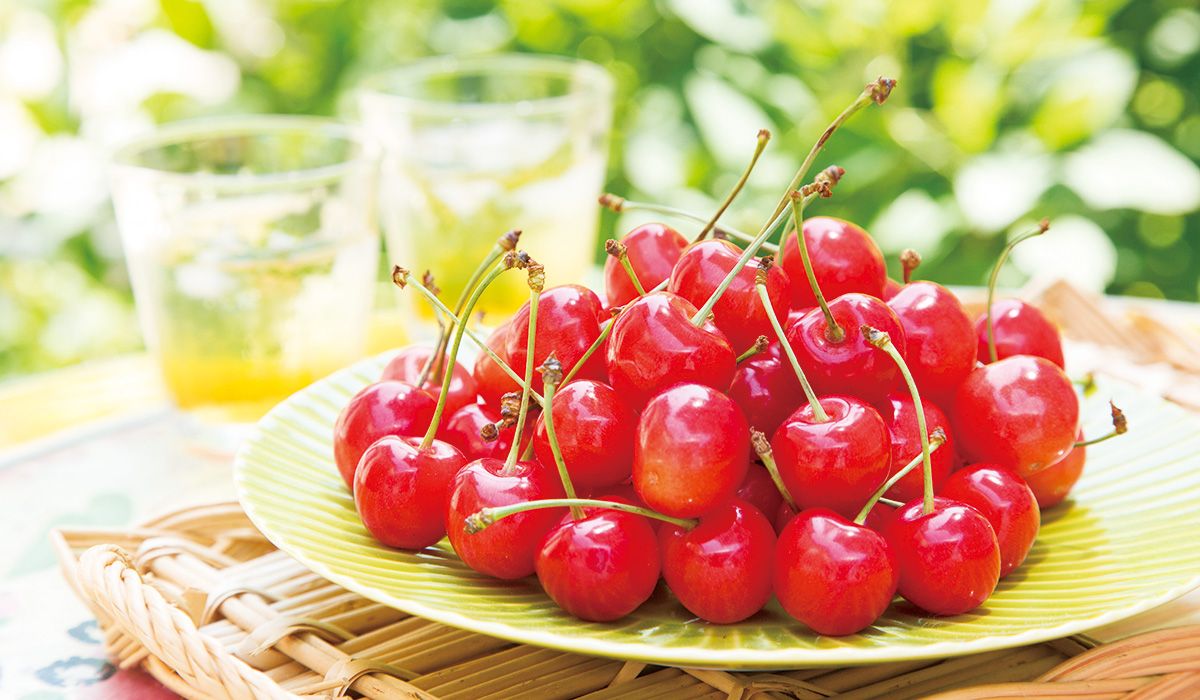
Cherry Season Begins! 3-Year Bumper Crop Forecast and Latest Brand Comparison
Cherry shipping starts late May. A bumper crop is expected in Yamagata for 2026. Learn about the features, prices, and history of Sato Nishiki to Yamagata Benio.
Cherry Season Arrives: Shipping in Full Swing from Late May
Known as the "jewels of early summer," cherry season is officially underway for 2026. Deemed to transition from greenhouse to open-field cultivation around late May, the shipping peak runs through June. Thanks to moderate winter cold and favorable weather during the flowering period, a bumper crop is expected for the first time in three years, overcoming recent years of poor harvest.
Cherries are the quintessential early summer fruit, packing sweetness and acidity into a single tiny bite. However, because the harvest season is extremely short and the fruit is highly perishable, timing is everything. Here, we share the charms of cherries and details on the latest 2026 trends.
Cherry History and Famous Regions: Why Yamagata is the "Holy Land"
The history of cherries in Japan began in 1875 (Meiji 8) when the Ministry of Home Affairs introduced saplings from abroad. Initially, cultivation was attempted nationwide, but since the harvest coincides with the rainy season, many areas struggled with "fruit splitting" caused by rain.
Amid these challenges, Yamagata's unique basin climate—characterized by low rainfall during the rainy season and dramatic temperature shifts between day and night—proved ideal. In the Taisho era, Eisuke Sato of Higashine City, Yamagata, developed the still-unrivaled "Sato Nishiki" variety, cementing Yamagata as the holy land of cherries. Today, Yamagata Prefecture accounts for about 70% of Japan's cherry production.
2026 Harvest Outlook and Price Trends: A Good Year to Buy?
【Harvest Forecast】
The forecasted cherry harvest in Yamagata for 2026 is expected to exceed 10,000 tons, up 130% from the previous year. April frost damage was limited, and fruit-bearing conditions overall are excellent. In particular, the main variety "Sato Nishiki" is expected to yield large, high-sugar fruit.
【Price Estimates】
Despite the bumper crop, retail prices remain on par with last year or slightly higher for premium products due to rising logistics and material costs. A loose-packed 1kg box for home use will range from 7,000 to 9,000 yen, while high-end gift items (Tokushu rank) will range from 10,000 to 15,000 yen. However, with stable yields, it is a great year to find high-quality cherries with fewer disappointments compared to last year.
Major Variety and Brand Comparison: Finding Your Preference
While Sato Nishiki is the most famous variety, newer brands focusing on shelf life and size are gaining attention. Below is a comparison table of the leading varieties.
Variety | Flavor Profile | Texture & Shelf Life | Peak Season |
Sato Nishiki | Excellent balance of sweetness and acidity | Soft texture. Short shelf life | Mid to late June |
Benishuho | Low acidity with rich sweetness | Firm flesh. Good shelf life | Late June to early July |
Yamagata Benio | Extremely large (mostly 3L to 4L) | Crispy texture. Excellent shelf life | Mid June to early July |
Making its full debut in 2023, "Yamagata Benio" has rapidly grown its share for gifts and exports due to its astonishing 500-yen coin size and firm flesh that withstands transport. With production increasing in 2026, it is set to appear in many department stores and high-end supermarkets.
This season, growth is running about a week earlier than usual. Since the season is short, we recommend booking or purchasing early—ideally by mid-June for Sato Nishiki and late June for Benishuho.
【Sources】