Edo's Heat, 2026 "Sanja Matsuri" Dates Announced! Three Days of Brave Mikoshi and Tradition
A thorough guide to Asakusa's Sanja Matsuri from May 15, 2026. Discover its history, highlights, food stalls, and traffic tips for this major Edo festival.
Since Kurousagi (Black Rabbit) lived near Sensoji Temple for about seven years, I used to watch this festival from my room every year. From morning to late night, Asakusa transforms from its usual tourist-filled state into a vast and special space for the local community. Although the Kanda Matsuri also takes place in May, this year is an "off-year" (without portable shrine parades), so it seems the crowds will gather at the Sanja Matsuri.
2026 "Sanja Matsuri" Dates Decided! The Three Hottest Days of the Year in Asakusa
The dates for the 2026 Sanja Matsuri, the early-summer staple of Tokyo, have been announced. From Friday, May 15 to Sunday, May 17, 2026, the entire Asakusa area will be enveloped in a whirlpool of enthusiasm. Counted as one of the three major festivals of Edo, it attracts about 1.5 million visitors each year. The highlights include brave portable shrine (mikoshi) parades and traditional rituals. Here we explain the highlights, historical background, and tips for visiting the 2026 Sanja Matsuri.
Dates | Main Events |
May 14 (Thu) | Ritual to transfer spirits to the main mikoshi (evening) |
May 15 (Fri) | Grand Parade, Binzasara Dance dedication |
May 16 (Sat) | Annual Grand Festival Ceremony, Neighborhood Mikoshi Joint Parade |
May 17 (Sun) | Main Mikoshi Parade through neighborhoods (Departure/Return) |
700 Years of History: Prayers of the "Sanja Gongen"
The official name of the Sanja Matsuri is the "Asakusa Shrine Annual Grand Festival." Its origin dates back to 1312 and boasts a history of over 700 years. The festival is dedicated to three figures associated with the founding of Sensoji Temple, collectively referred to as "Sanja Gongen." During the reign of Empress Suiko, Hinokuma Hamanari and Takenari, two brothers fishing in the Miyato River (now the Sumida River), caught a statue in their net. A local scholar named Haji no Matsuchi recognized it as a statue of Kannon, and converted his own home into a temple to house it, which marked the beginning of Sensoji. Asakusa Shrine enshrines these three figures, and the Sanja Matsuri honors them.
Originally, it was a joint event with Sensoji Temple, but after the Shinto-Buddhism separation order of the Meiji period, it became an independent festival of Asakusa Shrine. However, the legacy of Shinto-Buddhist syncretism remains strong, as the mikoshi still march through the grounds of Sensoji. In the Edo period, it was also called the "Kannon Matsuri" or "Funa Matsuri," and it is said that the mikoshi were once carried across the Sumida River by boats.
Three Days of Highlights: Contrast of Stillness and Motion
Each day of the Sanja Matsuri offers a unique appeal. The "Grand Parade" on Friday is an elegant procession featuring musical floats, wood-chopping songs by firemen, and the "Binzasara Dance" (designated as a Tokyo intangible cultural property) winding through Asakusa. The procession in traditional costumes makes visitors feel as if they've stepped back into the Edo period.
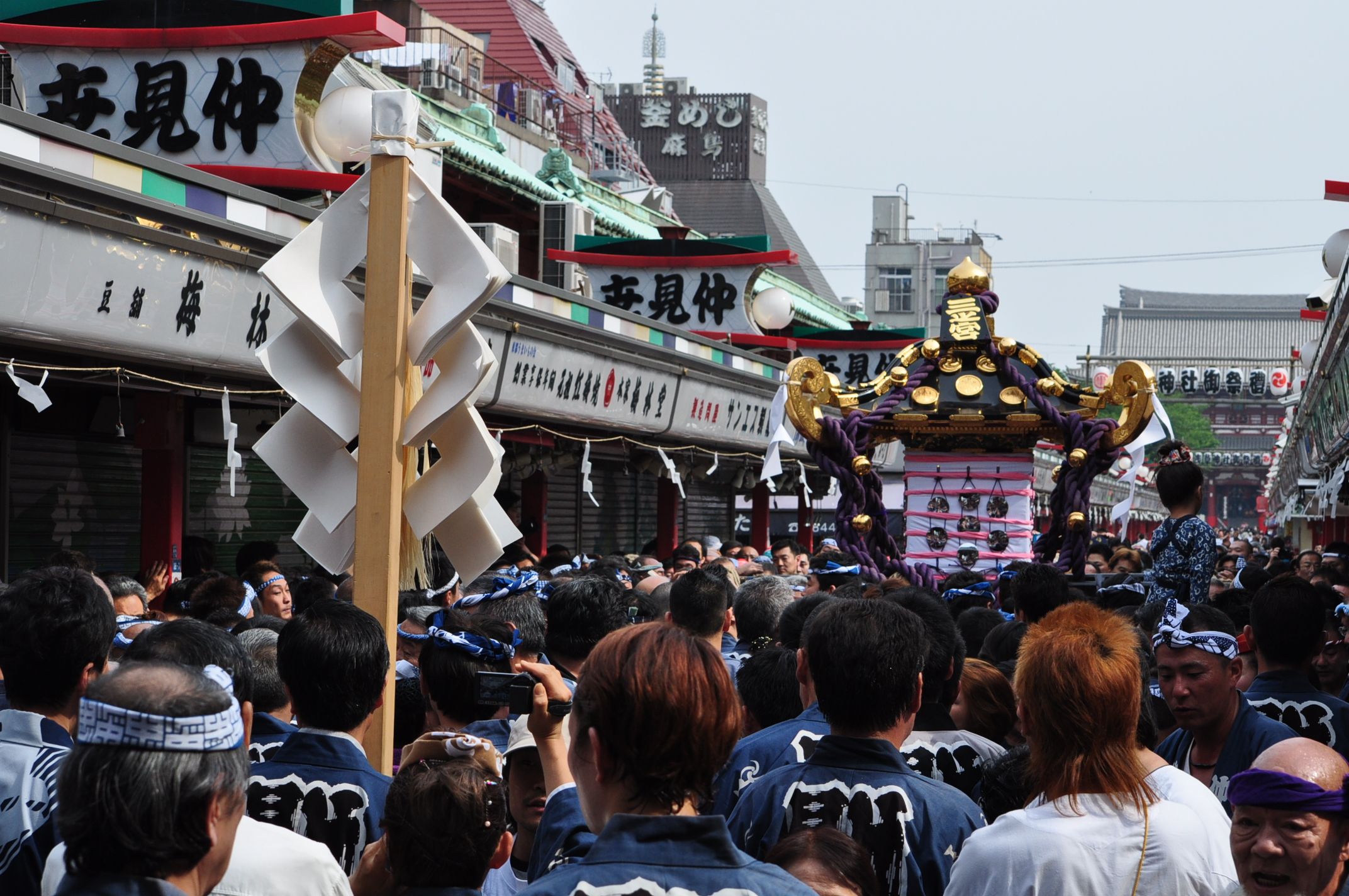
Saturday's highlight is the "Neighborhood Mikoshi Joint Parade." Around 100 mikoshi from neighborhoods around Asakusa gather behind the main hall of Sensoji to receive blessings before returning to their respective communities. The sight of mikoshi filling every alley of Asakusa is breathtaking, with energetic chants of "Soiya, Saa" echoing through the town.
And finally, Sunday marks the festival's climax with the "Main Mikoshi Parade." Early in the morning, the "Miyadashi" departure of the three main mikoshi (Ichinomiya, Ninomiya, and Sannomiya) from Asakusa Shrine is the moment when the carriers' passion reaches its peak. Watching the massive mikoshi, weighing about one ton, being carried through the crowd is deeply moving. The intense shaking of the mikoshi, called "Tamashifuri," is believed to enhance the spiritual power of the deities to pray for good harvests and ward off plagues.
500 Food Stalls and Edo Atmosphere Supporting 1.5 Million Visitors
Another pleasure of the Sanja Matsuri is the massive number of food stalls (yatai) lining the Sensoji grounds and surrounding streets. With about 500 stalls, they offer a wide variety of items from staples like yakisoba and takoyaki to traditional Asakusa sweets. The areas around Nishisando Shopping Street and Hoppy Street are especially lively day and night, filled with the energy unique to Japanese festivals.
During this period, the entire town of Asakusa is painted in festival colors. Locals stylishly wear their family-inherited happi coats and carry the mikoshi with pride. Tourists can experience the bonds of the Edo-born community by feeling this heat. The fusion of historical buildings and the festival when mikoshi pass Nakamise Street is of magnificent beauty.
Traffic Restrictions and Safety Tips for Visitors
During the Sanja Matsuri, large-scale traffic restrictions will be in place on Kaminarimon Street and Umamichi Street, especially on Saturday and Sunday. The surrounding streets turn into pedestrian zones, making vehicle passage almost impossible. Public transport is essential, but the nearest Asakusa Station (Tokyo Metro Ginza Line, Toei Asakusa Line, Tobu Skytree Line, Tsukuba Express) becomes extremely crowded, sometimes requiring entry control. Please plan ahead, keep hydrated, and take measures against heatstroke.
Additionally, being close to the mikoshi is very dangerous. Follow the instructions of police and security guards so as not to get in the way of the carriers. Sunday's departure and return have areas off-limits to general spectators, so checking the route beforehand is highly recommended.
Conclusion: Carrying the Soul of Asakusa to the Next Generation
The Sanja Matsuri is not just a tourist event; it is the "soul" of the people living in Asakusa. Even as eras change, the inherited traditions and people's passion remain. The 2026 Sanja Matsuri will show great excitement, along with prayers for peace and prosperity. Why not visit Asakusa in May to feel the breeze of Edo?
[References]
1. Asakusa Shrine Official Website (Sanja Matsuri)
2. Asakusa Tourism Federation (Asakusa Event Info)
3. GO TOKYO (Tokyo Official Tourism Website)