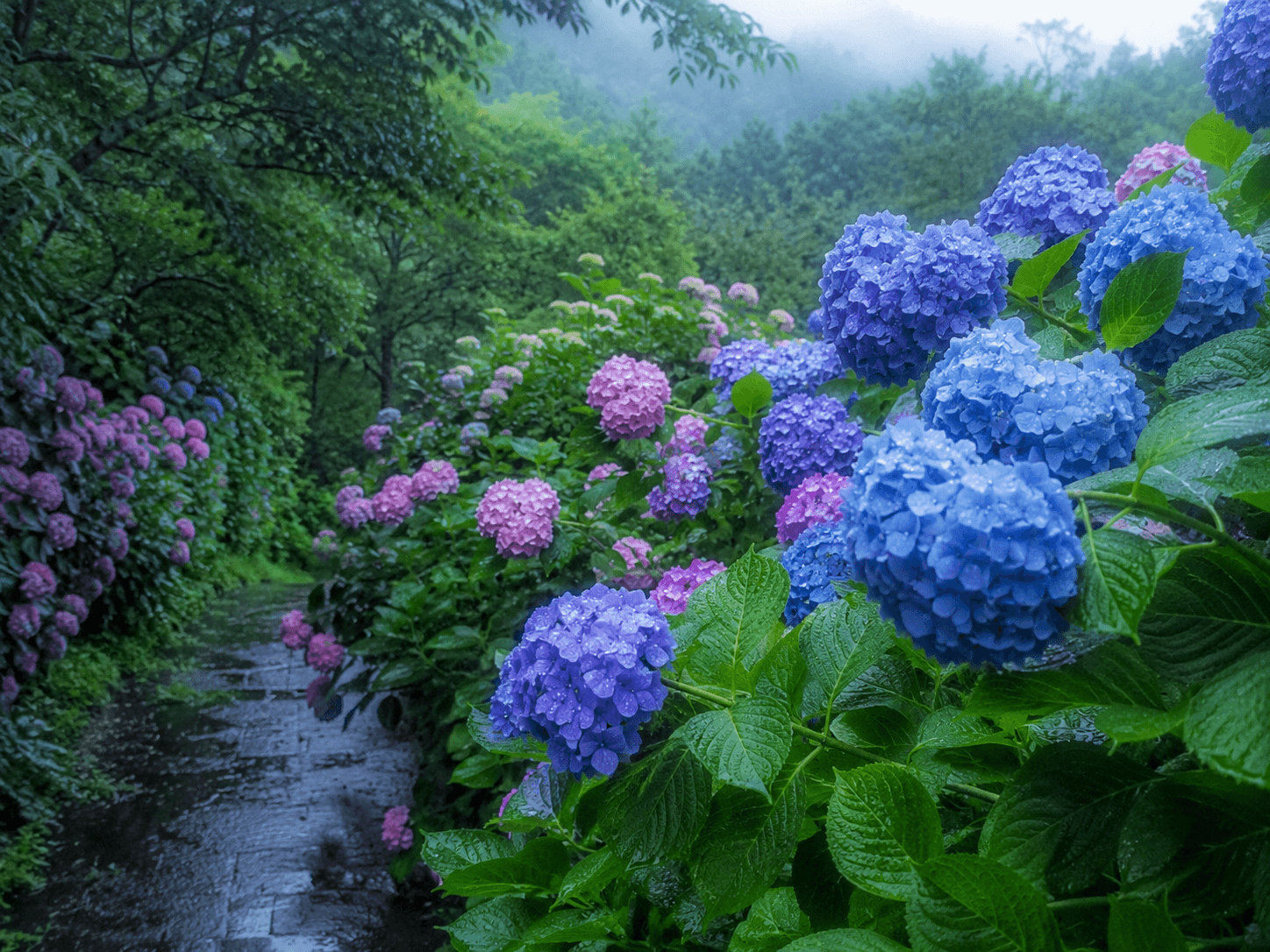
2026 Hydrangea Front: Top Spots in Kanto and the Secret of the 'Seven Changes'
Hydrangeas are the star of June. From a ranking of top spots in Kanto to the scientific reasons behind their color changes and how to grow them at home, discover the multifaceted charm of hydrangeas.
The Gem Native to Japan Coloring the June Sky: 'Hydrangea'
Shining brightly amidst the long rains of Tsuyu is the "hydrangea" (Ajisai). Actually native to Japan, it has been beloved by Japanese people since the era of the Man'yoshu. The beautifully colored parts we admire, thinking they are "flowers," are actually developed "sepals" (decorative flowers) meant to protect the true flowers, which bloom quietly and small in the center.
Due to its tendency to change color, once called "Seven Changes," it wasn't favored by the samurai class for a period. However, when introduced to Europe by Siebold and others in the Edo period, it evolved into the glamorous "Western Hydrangea," leading to the diverse varieties we see today.
Outstanding Scale in Kanto! Must-See Spots Selected by Number of Plants
The Kanto region is dotted with famous hydrangea spots boasting an overwhelming scale of tens of thousands of plants. Based on the latest 2026 information, we've summarized three spots with a particularly high number of plants in the table below.
Spot Name | Location | Number of Plants | 2026 Admission (Adult) |
Hondoji Temple | Matsudo, Chiba | Approx. 50,000 | 500 yen |
Kitaibaraki Ajisai no Mori | Kitaibaraki, Ibaraki | Approx. 30,000 | 300 yen (Special rate) |
Shimonita Ajisai Garden | Shimonita, Gunma | Approx. 20,000 | Free (2026) |
Details and Access to the 3 Major Spots
1. Hondoji Temple (Matsudo, Chiba) Nationally famous as the "Hydrangea Temple." The sight of 50,000 plants blooming profusely against the backdrop of a five-story pagoda is breathtaking. It's easily accessible, a 10-minute walk from Kita-Kogane Station on the JR Joban Line, but since it gets very crowded during peak season, visiting on weekdays or early mornings is recommended.
2. Kitaibaraki Ajisai no Mori (Kitaibaraki, Ibaraki) A place like a hydrangea museum with over 1,500 varieties. In 2026, due to rainfall affecting the blooms, admission is available at a special price of 300 yen. It's convenient to visit by car or take a 10-minute taxi ride from Isohara Station on the JR Joban Line.
3. Shimonita Ajisai Garden (Shimonita, Gunma) Right off the Shimonita IC on the Joshin-etsu Expressway, about 20,000 plants spread across vast hills. Although the hydrangea festival was canceled in 2026, the garden is open for free, allowing you to relax and stroll among the hydrangeas in their natural state.
'Blue' or 'Red': The Scientific Reason Behind the Color
The reason hydrangeas change color depending on the soil is related to the binding of anthocyanin pigments in the flowers and aluminum in the soil. Because Japanese soil is often acidic due to volcanic ash, aluminum dissolves easily and binds with anthocyanin, generally resulting in a "blue" color.
Conversely, if the soil is neutral or alkaline, the aluminum does not dissolve, so it retains the pigment's original "red/pink" color. White hydrangeas, like Annabelle, do not have anthocyanin to begin with, so they remain white regardless of the soil.
How to Grow Them at Home: Water and Pruning are the Keys to Beauty
Hydrangeas are plants that love water very much. Especially when grown in pots, they will wither quickly if they run out of water during the blooming period, so the basic rule is to water them generously morning and evening. For ground planting, a semi-shaded area away from the afternoon sun is ideal.
The biggest point to make them bloom beautifully the following year is the timing of "pruning." By mid-July, cut them off above the bud two nodes below the flower. If it gets later than this, you must be careful as you might cut off the buds meant for next year's bloom.
【Sources】
- Matsudo City Tourism Association: Hondoji Hydrangea Info
- Ibaraki Tourism Guide: Kitaibaraki Ajisai no Mori
- Shimonita Town: Latest Status of Ajisai Garden