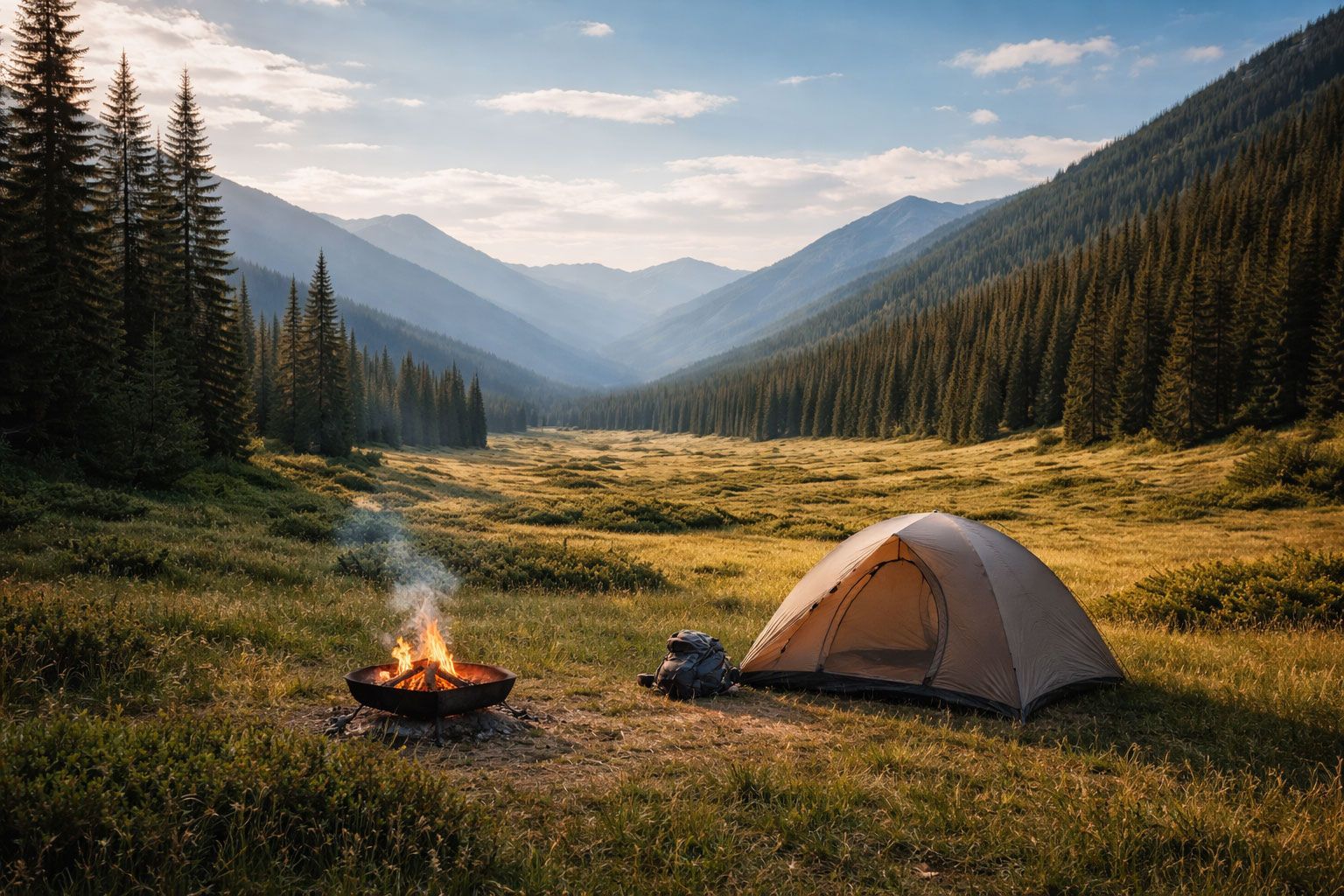
Thoughts on Camping: Lowering the Hurdle to Get Started
Interested in camping but hesitant to start? Here is a guide to help you find your own camping style and lower the entry barrier.
First of all, it's impossible for people around 60 (those who round up to 60) whose physical strength has declined to camp like 20-something campers. There are probably a hundred different styles of enjoying camping for a hundred different people. Therefore, to help you find your own style, here is an overview of camping categories based on their difficulty level.
Difficulty | Category | Description |
Low | Day Camp | Transportation can include trains or walking in addition to cars. It is close to a barbecue. It ranges from using simple pop-up tents (beach shades or beach tents) at the sea or river, to proper 1- to 2-person tents. However, if you cannot set up and pack away quickly, the task will take up the whole day, so many people use only a tarp without even pitching a tent.
|
Low | Glamping | Usually overnight. Since you have almost no luggage, you can travel by train, bus, or on foot, in addition to cars. However, the facilities offer hotel-like full service. Whether this can be called camping is debatable, but the atmosphere is certainly there. While it is easy to execute, the lodging costs are high. It is light on luggage but not on your wallet. |
Low | RV Park (Car Camping) | Sleeping in your car. While sleeping in cars at highway parking areas has become a social issue, there are dedicated spaces offering this service. Although it might feel far removed from the word 'camping,' it could be included in a broad sense. |
Medium | Touring Camp | Often refers to solo camping using single-rider transportation like bicycles or motorcycles. Since it involves staying overnight, equipment tends to increase compared to day camps, restricting transportation. Because you are on two wheels, you can explore off the beaten path, and it is said that veteran campers eventually end up here. |
High | Free Site Camping | This is probably what most people imagine when they think of camping. To be honest, this is the most difficult style. You cannot enjoy it without strong motivation and deep understanding from your family. Of course, the joy of success is immense, but the preparation alone is a major task. |
Medium | Auto Camping | While it requires similar effort and motivation as free site camping, it is less difficult due to easier luggage transport, power access, and protection against bad weather. It is the most accessible for family or group camping. However, having everyday conveniences like your car close by can detract from the feeling of living in nature, preventing you from fully enjoying the extraordinary experience of camping. But perhaps that's just a matter of preference. |
In short, there are various forms of camping. Those reading this article are likely interested in camping but have not done it, and are looking to start now that they are around 60 and want a little push. Below is a checklist to help identify your preferences.
<Themes>
- Do you want to combine camping with a long-distance trip?
- Is your goal to save on lodging costs?
- Is your goal to experience something out of the ordinary?
- Is your goal to feel nature and gain a sense of freedom?
- Do you want to enjoy it with close friends/family, or by yourself?
<Effort and Physical Strength>
- Is your transportation to the site by car or train?
- Is your luggage within a range you can carry alone, or do you want to bring various things?
- If in a group, can you share roles to reduce the load on a single person?
- Do you have enough experience or understanding of the effort required to pitch a tent?
- Have you considered meal preparation and cleanup?
- Carrying water is harder than expected. Have you checked the water facilities sufficiently?
My recommendation is not to plan a large-scale, perfect camp from the start. And start with solo camping. Limit your stay to one night, or preferably, a day trip. This is the best way to start. Next, let's look at the minimum equipment needed under these assumptions.
<Day Camp Equipment>
For a day camp, there is no need to bring a tent. However, if the weather is bad, you can cancel and do a mock camp at home. The key is not to stress and just go with the flow. This equipment list is a suggestion from Black Rabbit, so don't forget that choosing your own gear is part of the fun.
Equipment Name | Role & Details |
Gas canister + burner | Ideal to have a compact, self-standing burner to reduce luggage. However, as we age we make more mistakes, so a stable one is better. |
Mini pot | A pot for boiling water directly on fire, for making coffee or tea. Yang Wen-li from Legend of the Galactic Heroes called coffee 'muddy water,' but no drink fits camping better than coffee. |
Coffee set + water | To be honest, 2-3 drip bags are enough. Avoid instant (powdered) coffee. Fragrant coffee is recommended. |
Chair (with backrest if possible) | Essential. To relax, enjoy the beautiful scenery, and sip coffee even on a day trip, you need a compact but excellent chair. It is crucial for reading or listening to music. Invest in a good one even if it is slightly bulky. |
Book (1 or less) | You are not going there just to read. While you will read, the essence is to unwind. Bring only one book. A poetry book that you don't usually read is recommended. |
Lunch or snacks (if needed) | Cooking requires too much luggage. Instant cup noodles or cup rice are recommended. Candies or chocolates are also good. Rice crackers or potato chips are noisy when eaten, which ruins the atmosphere. |
Tarp (if needed) | Tarp (if needed): A sunshade sheet. Just having this makes it feel like camping. It provides shade and protects against light rain. Because it's just a sheet and poles, it packs down surprisingly small. It is optional, but personally, I consider it essential. |
*Since it is a day trip, do not bring bulky items like fire pits or tents. Keep it to the bare minimum—just one bag.
As you can see from the equipment list, unlike a typical trip, the real pleasure of camping is spending time luxuriously in beautiful scenery, and this principle should be preserved even for day camps. It is a day camp, not a day trip. If you get this wrong, your short day schedule will become even more rushed, which defeats the purpose.
<Solo Overnight Camping Equipment>
Having covered day camp gear, here is the essential additional equipment required for overnight solo camping. This list assumes solo (one-person) overnight camping.
Equipment Name | Role & Details |
Sleeping bag + insulation mat | Without this in winter, you will die. Nights are cold even in spring and autumn. You might not need it in summer if you have a cot. An insulation mat is super compact, but makes a huge difference. They are a set. |
Cot | A simple bed. It keeps you off the ground, avoiding cold in winter and allowing ventilation in summer. Ground bumps won't bother you, so bring one if you can. |
Tent + ground sheet, pegs + mallet | Bulky and heavy. For solo camping, a small solo tent is recommended. In summer, mesh ventilation is essential due to insects. A ground sheet helps with insulation and smoothing out bumps, but it's a matter of preference and weight. Don't forget tighteners (guyline runners), pegs, and a mallet. |
Fire pit + charcoal + tongs + heat-resistant gloves + lighter + extinguishing urn + fire starter | Hard to carry on a train, but highly recommended if traveling by motorcycle. The star of night camping. It can be used for cooking, so you could omit the gas burner set, but a backup is always good. |
Drinks (water, alcohol, etc.) | Water for cooking is essential. Having a drink while watching the campfire is the best. Some people prefer a dedicated kettle instead of boiling water in a pot. |
Ingredients + cookware + seasonings + tableware + cutlery + table + dish soap etc. | Essential if you plan to cook dinner or breakfast. You must also consider cleanup. Washing dishes after returning home is an option, but be careful as they can leak and stain other gear. Alternatively, eating local dishes at a local restaurant is a great option. Personally, cooking in camp from the start increases luggage and hurdles for beginners. |
Lantern | Essential. Campsites are pitch black at night. You need light. An LED lantern in a classic style adds to the atmosphere. If it's too bulky, a small one is fine. |
Power bank + cable | Since smartphones may not last all day, bring one if you need it. However, it is ideal to keep your phone in your bag. Using your phone pulls you back into daily life; it is the enemy of relaxation. |
Insect repellent spray, portable fan | Essential, especially in summer. |
The highlight of overnight camping is the campfire. Honestly, even if you eat CalorieMate, the campfire is indispensable. I understand the appeal of camping meals, so bring the tools if luggage permits. However, beginners should be mindful as prep, cooking, and cleanup take time. As mentioned above, dining at a local restaurant to enjoy local ingredients is also a great travel experience, even if it temporarily interrupts the camp atmosphere.
Having read this far, don't you feel like you can find a camping style that fits even someone around 60? To repeat, the essence of camping is the extraordinary environment, nature, and the luxurious use of time. Once you realize everything else is just a means to set the stage, you will be able to choose your own camping style and have a wonderful time.
【Bonus】
List of other equipment.
Equipment | Overview |
Air mattress, pump | Some people prefer air mattresses over cots. Since they are light and pack down small, they are good for those mindful of luggage size. I once tried a waterbed at a friend's house when they were popular; the instability is somewhat similar. |
Folding deck chair, ottoman | Some are even more comfortable than chairs at home. One with an ottoman (footrest) is perfect. |
Compact table, parasol | A compact table is highly convenient for meals and various tasks. Some tables have a hole in the center for an umbrella. |
Saw, knife | A saw is useful for cutting firewood or logs, but not needed if you use charcoal. |
Folding bucket, folding water tank, cooler box, first-aid kit | Not essential, but handy in emergencies. |